
Category: Skye Suess

  • Infographic Comparison

    Infographic Comparison

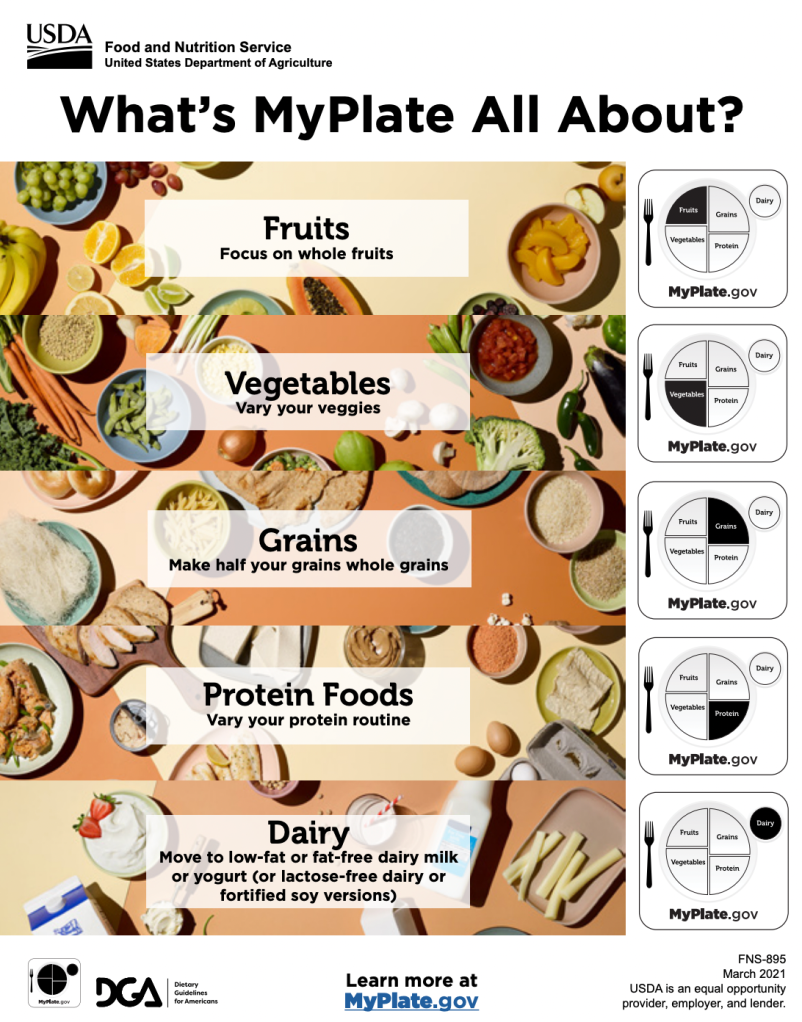
    What’s MyPlate All About?

    The “What’s MyPlate All About?” infographic from the USDA effectively communicates healthy eating habits through smart design choices.

    Visual hierarchy is clear and intuitive. The bold title grabs attention, followed by a central MyPlate graphic that visually summarizes the message. Supporting tips and resources are organized in a logical, easy-to-follow layout.

    Color choices play a crucial role. Each food group is represented by a distinct color, red for fruits, green for vegetables, orange for grains, purple for protein, and blue for dairy, mirroring the official MyPlate system. These bright, contrasting colors improve recall and help users quickly identify categories.

    The typography is clean, with good contrast and legible font sizes. Bold subheadings and bullet points break up text, making the content scannable and accessible across age groups.

    There’s a strong balance of text and visuals. The MyPlate graphic acts as a visual anchor, while short, actionable tips complement it without overwhelming the reader. Icons such as utensils and food group symbols enhance engagement and understanding.

    Although it doesn’t include numerical data, the infographic tells a clear, educational story. It introduces a concept, explains it visually, and offers practical next steps. The concluding call to action and website link encourage further learning.

    Overall, this infographic is an excellent example of how thoughtful design, using hierarchy, color, typography, and visuals can effectively educate and motivate healthy behavior.
    Sleep Well

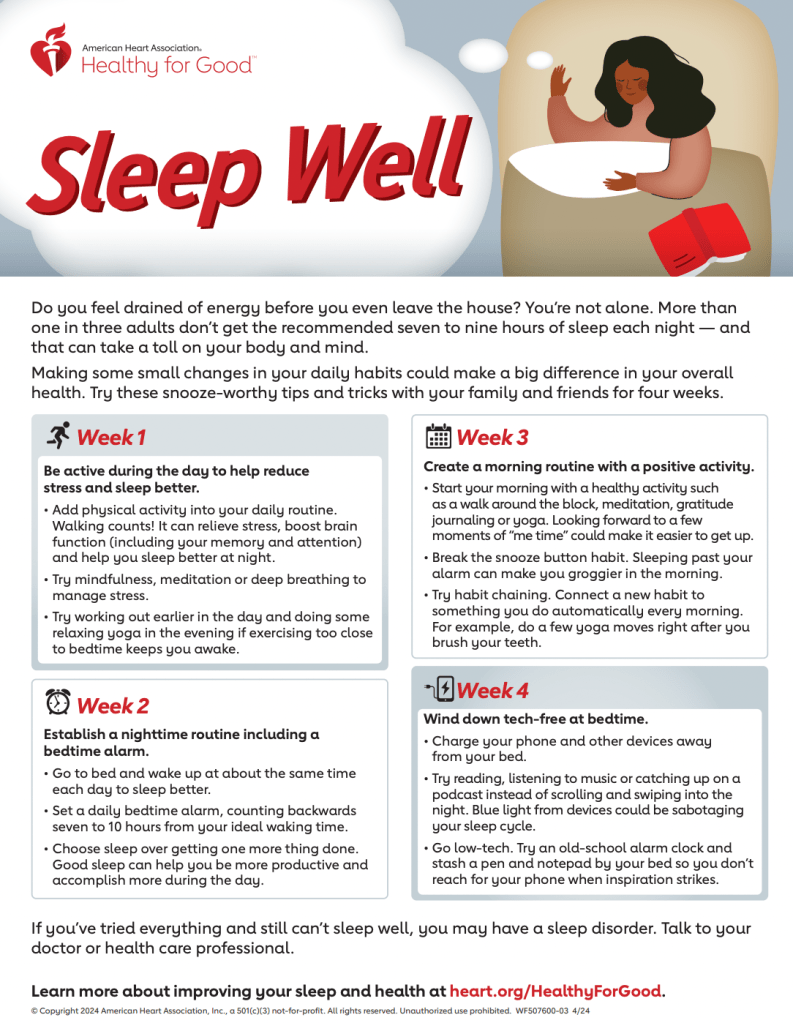
    The “Sleep Well” infographic from the American Heart Association effectively communicates how to build better sleep habits over four weeks using thoughtful design and a clear, progressive structure.

    Visual hierarchy is strong, with a logical week-by-week layout that leads the viewer through four steps. Each week is clearly labeled and paired with concise tips, making the content easy to follow and actionable.

    Color choices reinforce the infographic’s message. The use of calming blues and purples evokes feelings of relaxation and restfulness, which aligns well with the theme of sleep. The soft background allows text and icons to stand out without creating visual fatigue.

    Typography is clean and simple, using good contrast and spacing. The text is broken into short, digestible segments, with bold headings and bullet points that support quick scanning and comprehension.

    There’s a solid balance of visuals and text. Minimalistic icons complement each week’s tip, reinforcing the message without overcrowding the space. This visual support makes the information more engaging and easier to remember.

    Although it doesn’t present numerical data, the infographic tells a clear story—guiding the reader through a gradual, manageable plan to improve sleep habits. Each step builds on the last, offering realistic strategies such as limiting screen time and setting a bedtime alarm.

    Overall, “Sleep Well” is an effective infographic. It combines calm visuals, simple language, and a clear structure to support lasting behavioral change.

    Comparison

    In my own infographic, I plan to incorporate similar elements from both examples, such as a concise format and clear, organized layout that makes the information easy to read and digest. I aim to blend the engaging visuals used in the “MyPlate” infographic with the practical, high-quality content found in “Sleep Well.” Analyzing these designs has given me a better understanding of what works well, and I’m excited to put my own creative twist on the topic while applying these effective design principles.

  • How to Balance Health and Academics, Without Burning Out

    How to Balance Health and Academics, Without Burning Out

    In today’s fast-paced academic environment, students are often expected to juggle rigorous coursework while maintaining their physical and mental health. This balancing act can be overwhelming and, if not managed properly, may lead to burnout, a state of chronic stress that affects performance and well-being. The good news is that with time management and stress-reduction techniques, it’s possible to succeed academically while staying grounded.

    Master Time Management

    Effective time management is the cornerstone of a balanced student life. Start by creating a weekly schedule that includes classes, study sessions, meals, exercise, and downtime. Tools like Google Calendar can help organize your day and prioritize tasks.

    The Pomodoro Technique: studying for 25 minutes followed by a 5-minute break can improve focus and prevent mental fatigue. According to a study published in Frontiers in Psychology, taking structured breaks enhances cognitive function and prevents burnout in high-pressure environments.

    Avoid multitasking, this often reduces productivity and increases stress. Instead, tackle one assignment at a time and aim to complete the most demanding tasks when your energy is highest.

    Prioritize Sleep and Nutrition

    Sleep and nutrition are often the first casualties in a busy academic life, but they’re essential for performance and well-being. The Centers for Disease Control and Prevention (CDC) recommends 7–9 hours of sleep per night for young adults. Chronic sleep deprivation can impair memory, concentration, and decision-making skills—skills critical for academic success.

    Equally important is maintaining a balanced diet. Skip the temptation of energy drinks. Instead, opt for whole foods rich in protein, fiber, and healthy fats to keep your brain and body fueled.

    Practice Mindfulness and Stress Reduction

    Stress is inevitable, but how you respond to it makes all the difference. Mindfulness practices such as meditation, deep breathing, or journaling can help you stay grounded. Apps like Headspace and Calm offer guided meditations specifically for students.

    According to the American Psychological Association, mindfulness not only reduces anxiety but also enhances focus and emotional regulation, crucial tools for academic resilience.

    Know When to Seek Help

    Balancing everything doesn’t mean doing it alone. If you’re feeling overwhelmed, talk to a counselor or academic advisor. Most schools offer free mental health resources and tutoring services, use them.

    Balancing health and academics isn’t about doing more; it’s about doing what matters most efficiently and mindfully. By managing your time wisely, prioritizing your health, and actively reducing stress, you can thrive both in and out of the classroom.

  • Move your body, boost your mind

    Move your body, boost your mind

    College life is demanding it can often feel like there just aren’t enough hours in the day. With so many responsibilities, exercise often gets pushed to the bottom of the to-do list. But what if movement wasn’t just another task, what if it was the key to managing your stress, boosting your mood, and even helping you perform better academically?

    Regular physical activity is one of the best things college students can do for their overall health. Not only does it support physical wellness, but it also has a powerful impact on mental health, concentration, sleep, and emotional resilience—all critical for success during the college years.

    Mental and Physical Benefits of Exercise:

    Exercise doesn’t just build stronger muscles; it builds a stronger mind.

    According to the American College Health Association (ACHA), students who engage in regular physical activity report lower levels of stress, anxiety, and depression. Exercise increases the production of endorphins, your brain’s natural “feel-good” chemicals, and can help regulate mood, reduce fatigue, and improve self-esteem.

    In fact, a review published by the National Institutes of Health (NIH) confirms that exercise is linked to improvements in memory, attention, and cognitive flexibility, all of which can enhance academic performance. Even short bouts of movement like a brisk 10-minute walk can improve focus and reduce mental fog.

    In addition to mental health benefits, exercise helps regulate sleep, boosts immune function, and reduces the risk of chronic diseases later in life. Simply put, regular movement is one of the most effective ways to feel better, think clearer, and stay healthy.

    Fit Exercise Into a Busy College Schedule:

    Staying active doesn’t require hours in the gym or a strict fitness routine. What matters most is consistency, not perfection.

    Here are a few realistic strategies to help you make exercise a habit:

    • Start small: Even 15-30 minutes a day is enough to make a difference. Walk to class instead of taking the bus, take the stairs, or do a quick bodyweight workout in your room.
    • Schedule it like a class: Put your workouts in your calendar and treat them as non-negotiable appointments. This mental shift helps prioritize movement.
    • Use your resources: Many colleges offer free or low-cost gym memberships, group fitness classes, or intramural sports. Take advantage of what’s available.
    • Make it social: Find a workout buddy or join a fitness club. Turning exercise into a social activity can keep you accountable and make it more enjoyable.
    • Combine it with study breaks: Instead of scrolling on your phone between study sessions, do a quick stretch or walk. These help reset your focus.
    • Explore active hobbies: Dancing, hiking, swimming, or even playing sports on campus can be an easy way to do what feels fun for you.

    Move for Your Mind:

    In college, it’s easy to fall into the mindset of “I’ll exercise when I have more time.” But the truth is, regular movement actually gives you more time, through better focus, higher energy, and improved mental well-being. It’s not just about physical health; it’s about giving your brain and body the support they need to handle college life.

    Whether it’s a morning jog, a yoga class, or just walking while listening to a podcast, every bit of movement counts. By making exercise a regular part of your routine, you’ll build habits that not only help you thrive in college, but for the rest of your life.

  • Nutrition, without the stress

    Nutrition, without the stress

    College life is often fast-paced, unpredictable, and loaded with responsibilities. Between juggling classes, part-time jobs, social events, and exams, students often find themselves making quick, less-than-ideal food choices. Fast food may be convenient, but it lacks the nutrients students need to thrive physically and mentally.

    Good nutrition doesn’t have to be expensive or stressful. Eating healthy on a college budget is entirely possible with a few simple strategies and a little planning. And the benefits go far beyond just physical health, balanced nutrition can boost your mood, improve academic performance, and even help manage stress.

    Importance of Nutrition in college:

    Proper nutrition fuels both your body and brain. Without it, you’re more likely to experience fatigue, poor concentration, and a weakened immune system, none of which help when you’re trying to get through midterms or stay alert in class.

    According to the Centers for Disease Control and Prevention (CDC), consuming a healthy diet is linked to reduced risk of many chronic diseases and can improve academic outcomes by supporting better cognitive performance and emotional well-being. For college students, this means that smart eating habits can lead to better grades, sharper focus, and more energy to take on your day.

    Despite this, many students struggle to eat nutritious meals due to tight budgets and time constraints. The key is finding affordable, stress-free ways to fuel your body.

    How to eat healthy on a budget:

    Some superfoods and organic labels come with a price tag, but plenty of nutritious staples are budget-friendly. Here are a few tips to help you save your dollar:

    • Plan your meals: Create a weekly meal plan and shopping list before hitting the store. This helps avoid impulse buys and reduces food waste.
    • Buy in bulk: Whole grains like brown rice, oats, and pasta can be bought in large quantities for less per serving.
    • Embrace frozen and canned options: Frozen fruits and vegetables are just as nutritious as fresh ones and often cost less.
    • Stick to store brands: Generic brands usually offer the same nutritional value as name brands at a lower price.
    • Cook in batches: Preparing several meals at once (like on Sunday nights) means less cooking during the week and more money saved from eating out.

    A 2020 study by the Journal of Nutrition Education and Behavior found that students who were taught simple cooking skills were more likely to make healthier food choices and save money over time. That shows just how impactful cooking can be.

    Easy, Stress-Free Meal Ideas:

    Here are a few quick, nutritious meals you can prepare with minimal effort:

    • Overnight oats: Mix rolled oats, milk (or a dairy-free alternative), fruit, and a spoonful of nut butter in a jar. Let it sit in the fridge overnight.
    • Chili or lentil stew: Make a big pot using canned beans, tomatoes, frozen corn, and seasoning. Freeze portions for later.
    • Tuna and spinach wrap: Combine canned tuna with Greek yogurt or light mayo, layer with spinach, and roll it in a whole-grain tortilla.
    • Egg and veggie stir-fry: Scramble eggs and toss in frozen vegetables. Serve over brown rice or noodles for a quick and balanced meal.
    • DIY grain bowls: Start with quinoa or rice, add a protein (like beans or chicken), vegetables, and a simple dressing like olive oil and lemon juice.

    Having a few go-to meals on hand makes it much easier to avoid fast food temptation on stressful days.

    Build Habits That Last:

    College is a great time to develop healthy habits that you can carry into adulthood. Learning to cook, budget, and plan meals are essential life skills that pay off for years. Most importantly, don’t aim for perfection, aim for balance. It’s okay to have unhealthy food now and then, as long as most of your meals provide the nutrients your body needs to succeed.

    By focusing on affordable staples, planning ahead, and keeping meals simple, you can stay well-nourished without draining your wallet or your time. Healthy eating isn’t about restriction, it’s about making choices that help you feel your best, inside and out.

  • CSR Spotlight: CVS Health’s “Be The First” Campaign

    CSR Spotlight: CVS Health’s “Be The First” Campaign

    CVS Health has emerged as a standout in the health and wellness space, showing what it truly means to align brand values with real-world impact. With growing awareness around social and health issues, genuine corporate responsibility is more important than ever, and CVS delivered with its groundbreaking “Be The First” campaign, taking meaningful action to improve public health.

    About CVS Health and “Be The First”:

    • CVS Health, one of the largest pharmacy and healthcare providers in the United States, made headlines in 2014 when it became the first national retail pharmacy to stop selling tobacco products. This bold move wasn’t just a business decision, it was a signal that CVS was committed to walking the talk when it comes to health.
    • Building on that momentum, CVS launched the “Be The First” campaign in 2016, a five-year, $50 million initiative focused on tobacco-use prevention. Its main goal being to help create the first tobacco-free generation.

    Visibility:

    • CVS Health issued press releases and positioned its leadership, including then-CEO Larry Merlo, as champions of the initiative. Their voices gave the campaign a face and helped stabilize the company’s role as a health advocate.

    Partnerships:

    • To reach more communities, CVS teamed up with trusted organizations like the Truth Initiative and the American Cancer Society. These collaborations added credibility and helped the campaign extend its reach through joint events, educational programs, and shared messaging.

    Media Engagement:

    • On platforms like Twitter, Facebook, and YouTube, CVS connected directly with younger audiences. Videos such as “One Good Reason”, which featured teens sharing their motivations for staying tobacco-free, helped personalize the message and sparked conversation using hashtags #BeTheFirst and #OneGoodReason.

    Community Outreach:

    • CVS supported youth prevention programs in schools across the country, offering grants and resources for educators. This grassroots component played a crucial role in building awareness and inspiring long-term behavior change.

    Strength of the Campaign:

    • The strength of “Be The First” lies in its hopeful, empowering message. By focusing on the idea of being the first generation to break free from tobacco, CVS framed the campaign in a way that felt optimistic and action-oriented, especially for younger audiences. The blend of storytelling, data-backed education, and community involvement made the message stick.
    • “Be The First” wasn’t a marketing gimmick, it was a natural extension of CVS Health’s mission to help people live healthier lives. The campaign reflected the company’s core values of integrity, accountability, and commitment to health, all while reinforcing its shift from being just a pharmacy chain to a broader health solutions leader.
    • This move also helped pave the way for later initiatives like CVS’s “HealthHUB” stores and its acquisition of Aetna Insurance, signaling a deep and lasting commitment to public health.

    CVS Health’s “Be The First” campaign is a textbook example of how CSR can be both authentic and effective. By aligning its message with its mission, CVS didn’t just talk about health, they took real steps to protect it, especially for future generations. The campaign’s impact continues to resonate, setting a high bar for corporate responsibility in the wellness industry.

    CVS Health. (2016). Be The First Campaign. CVSHealth.com

    Truth Initiative. (2016). Partnership with CVS. TruthInitiative.org

    American Cancer Society. (2016). Youth Tobacco Prevention Programs. Cancer.org

  • The power of sleep: How rest fuels a happier you

    The power of sleep: How rest fuels a happier you

    In a society that often celebrates being busy, sleep is one of the first things people tend to sacrifice, whether it’s for extra work hours, social events, or late-night scrolling. But the truth is, getting enough quality sleep is about much more than just avoiding lethargy. It plays a critical role in your overall well-being, influencing everything from mental sharpness and emotional stability to physical health and wellness long-term.

    The Connection Between Sleep and Health:

    • Sleep plays a vital role in nearly every bodily function. According to the Centers for Disease Control and Prevention (CDC), adults need at least seven hours of sleep per night to maintain optimal health and well-being. Insufficient sleep has been linked to chronic conditions such as obesity, diabetes, high blood pressure, heart disease, and stroke (CDC, 2022). During sleep, the body undergoes essential repair processes: muscles rebuild, tissues regenerate, and hormones critical for growth and stress regulation are released.
    • Sleep deprivation also affects brain function. Memory consolidation, learning, decision-making, and emotional regulation are all compromised when we don’t get enough rest. A study published by the National Institutes of Health highlights that chronic sleep deprivation significantly impairs cognitive performance and increases the risk of mood disorders like depression and anxiety (NIH, 2021). Sleep is not a passive state, it is an active process that enables the body and mind to restore and reset.

    Why Prioritizing Sleep is Crucial:

    • Despite its importance, sleep is often the first thing people cut back on in hectic schedules. However, consistently sacrificing sleep can lead to long-term health consequences and decreased productivity. Sleep isn’t just about avoiding burnout, it’s about enhancing life quality. Proper sleep can improve immune function, increase energy levels, stabilize mood, and even promote better eating habits.
    • Creating a healthy sleep routine is a proactive step toward better wellness. This includes maintaining a consistent sleep schedule, reducing screen exposure before bed, creating a comfortable sleep environment, and avoiding caffeine or heavy meals late in the day.

    Sleep isn’t just downtime. It’s one of the most important tools your body and mind have to recharge and stay balanced. Whether you’re trying to think more clearly, improve your mood, or just feel better day to day, making sleep a priority is a smart and sustainable move toward a healthier, happier life.

    Centers for Disease Control and Prevention. (2022). How Much Sleep Do I Need? Retrieved from https://www.cdc.gov/sleep/about/?CDC_AAref_Val=https://www.cdc.gov/sleep/about_sleep/how_much_sleep.html

    National Institutes of Health. (2021). Brain Basics: Understanding Sleep. Retrieved from https://www.ninds.nih.gov/health-information/public-education/brain-basics/brain-basics-understanding-sleep

  • Shaping a healthier future: YMCA of the USA

    Shaping a healthier future: YMCA of the USA

    Health and wellness are lifelong journey and the earlier you start on the right path, the better your chances of long-term success.The YMCA understands this importance.Through its mission, core services, and commitment to community, the Y is shaping the next generation to embrace healthy living from a young age, ensuring stronger, happier adults for the future.

    The habits we form in childhood often stay with us into adulthood. Teaching kids to take care of their bodies through physical activity, nutrition, emotions, and relationships lays the foundation for a lifetime of well-being. Children who engage in regular exercise and learn healthy eating habits are less likely to experience chronic diseases, mental health struggles, and illness later in life. Understanding the value of movement and nutrition will help them to improve their own selves as well as help others.

    The YMCA’s mission: “To put Christian principles into practice through programs that build healthy spirit, mind, and body for all.” Founded in 1844, the Y has grown into one of the largest nonprofits in the United States, serving more than 22 million people annually through 2,700 locations.

    Health and wellness are core to the YMCA’s services. Through youth sports leagues, swim lessons, fitness classes, education, and summer camps, the YMCA ensures that children not only have access to physical activity but also learn the importance of taking care of their whole selves.

    Core Services:

    Youth Development Programs: From preschool to afterschool care, the Y provides a safe and nurturing environment where children can learn, play, and grow.

    Health and Wellness Initiatives: Kids have access to fitness programs, group sports, and swimming lessons that not only teach important physical skills but also build self-confidence and resilience.

    Community Health Programs: The Y tackles pressing health issues like childhood obesity, offering programs that teach families how to make healthy choices and stay active together.

    Character Development: Through programs that emphasize values like respect, responsibility, honesty, and caring, the Y ensures kids grow into compassionate and community-minded adults.

    The YMCA doesn’t just focus on individual health, it works to strengthen entire communities. Many YMCAs offer financial assistance so that no family is turned away due to inability to pay. They also provide vital community services, such as free meals for children in need, mental health support, and safe spaces for kids and teens to come together.

    Teaching kids early to prioritize their health is one of the most powerful things we can give them. Thanks to organizations like the YMCA of the USA, countless children across the nation are growing up stronger physically, mentally, and emotionally.

    Find out more at https://www.ymca.org/

  • Healthy mind, healthy habits

    Healthy mind, healthy habits

    Hi everyone,

    Today’s article will focus on the connection of your mind and body. Many people don’t realize how largely the way you act towards your outer self affects your inner self as well. The way you treat your body through your diet, movement, and sleep, directly impacts your emotional well-being, mental clarity, and resilience.

    Nutrition: The food you eat doesn’t just fuel your muscles; it fuels your brain too. Diets high in processed foods, sugars, and unhealthy fats have been linked to increased rates of depression and anxiety. On the other hand, a balanced diet rich in fruits, vegetables, lean proteins, and healthy fats can improve mood, energy levels, and cognitive function. Certain nutrients like omega-3 fatty acids, magnesium, and B vitamins play key roles in brain health. When you nourish your body properly, you’re not just protecting yourself from physical illness, you’re building a stronger mental foundation.

    Exercise: Physical activity releases endorphins in your brain that act as natural mood lifters. Regular exercise reduces levels of the body’s stress hormones, such as adrenaline and cortisol. Studies have even shown that consistent exercise can be as effective as medication for some people struggling with mild to moderate depression. Movement doesn’t have to mean hours in the gym; even going on a walk, doing yoga, or dancing can improve your mental state.

    Sleep: Sleep is when your brain processes emotions, stores memories, and clears out toxins. When you consistently have a bad sleep schedule, you’re more likely to experience irritability, difficulty concentrating, and mood swings. Prioritizing a healthy sleep schedule and aiming for 7-9 hours of quality sleep a night is one of the most underrated ways to improve your mental health.

    Treating your body with kindness is a form of self-respect. It’s not about rules or punishing yourself; it’s about listening to your body’s needs. Once you start prioritizing your body, you will see the immediate shift in your mental state. The belief that your body is worth the work you want to put into it, is the most powerful idea of all.


    https://www.theguardian.com/australia-news/article/2024/aug/10/poor-physical-health-associated-with-depression-through-link-to-brain-research-shows

    https://www.cureus.com/articles/121652-role-of-physical-activity-on-mental-health-and-well-being-a-review#!/

  • A guide to college wellness: how to be healthy(ish)

    A guide to college wellness: how to be healthy(ish)

    I’ve always had a passion for wanting to be the best version of myself. Whether its fitness or self-care, I try and push to keep improving. But, after moving to college, I found it difficult to keep a consistent routine. Things are always changing and taking care of yourself is the least of your worries. Now that I have been in college for three years, I have discovered tips on how to improve your health when it feels like there isnt enough time in the day. 

    This blog will focus on health and wellness. It is targeted towards busy college students similar to you and I who want to improve their life in all aspects but dont know where to start. I am in no means an expert, but I have gotten into a routine that works for me. 

    Whether you’re living in the dorms or an apartment, cooking is a challenge. Moving away from home and having to consistently feed yourself can be exhausting and lead to unhealthy choices like fast food. Wellness is all about balance, finding a middle ground between cooking and eating out. 

    The transition from high school sports to no longer being an athlete in college can be a hard adjustment. Finding easy ways to workout can help with the difficulty. Even just going on daily walks can help improve brain function. 

    I will also highlight the importance of self-care, finding a daily routine can reduce anxiety and stress while improving concentration (Glowiak, 2024). A consistent routine even something small that is repeated daily will be beneficial to your overall health and well being. 

    To learn more about health and wellness, follow along each week for more tips.

    https://www.snhu.edu/about-us/newsroom/health/what-is-self-care#:~:text=Engaging%20in%20a%20self%2Dcare,happiness%2C%20improve%20energy%20and%20more.